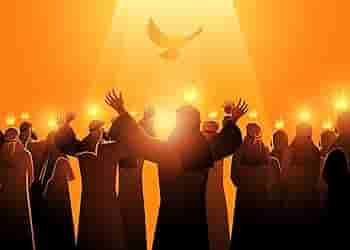
Glad to continue this—Week 3 is the theological hinge of the entire study. Everything before this week explains why spiritual identity was impossible; everything after it explains how spiritual life is now lived. Below is an expanded, teachable Week 3 with a clear introduction, careful biblical context, and interaction points woven throughout.
Week 3 — Pentecost
When Spiritual People Become Possible
Introduction: The Day Everything Changed
Up to this point in the study, we have seen something crucial:
- The Spirit was active before Pentecost
- God spoke, empowered, and intervened
- Yet no one was ever called spiritual
Why?
Because spiritual identity requires permanent indwelling, and that reality did not yet exist.
Pentecost is not merely a dramatic moment in church history—it is the birth of a new kind of humanity. On this day:
- God no longer visited His people
- God moved in
This week answers a central question of Biblical Spirituality:
What changed at Pentecost that made “spiritual people” possible?
The Big Shift at Pentecost
Before Pentecost:
- God’s presence was localized (tabernacle, temple)
- The Spirit’s activity was selective and temporary
- Spiritual life was defined by obedience to external law
After Pentecost:
- God’s presence is internalized
- The Spirit’s indwelling is universal for believers
- Spiritual life flows from union with Christ
Pentecost is not an upgrade in power—it is a transformation in presence.
Key Scripture 1: Acts 2:1–4 (ESV)
“And they were all filled with the Holy Spirit…”
Context and Insight
Acts 2 takes place during the Jewish feast of Shavuot (Pentecost)—a celebration associated with:
- the giving of the Law at Sinai
- harvest and firstfruits
Luke is intentional: just as the Law marked Israel’s formation, the Spirit now marks the formation of the Church.
Key observations:
- All were filled—not just leaders
- The Spirit comes once and decisively
- Visible signs (wind, fire, languages) signal divine residence, echoing Old Testament temple imagery
Fire once filled the tabernacle and temple (Exod. 40; 1 Kings 8). Now fire fills people.
God’s dwelling place shifts from buildings to believers.
Discussion Questions
- Why do you think Luke emphasizes that all were filled?
- How does this challenge the idea of spiritual elites?
- What Old Testament images does this scene intentionally echo?
Key Scripture 2: Acts 2:38 (ESV)
“You will receive the gift of the Holy Spirit.”
Context and Insight
Peter’s sermon explains the meaning of Pentecost. The crowd asks, “What shall we do?” Peter’s answer links:
- repentance
- forgiveness
- the gift of the Spirit
Important distinctions:
- The Spirit is a gift, not a reward
- Reception of the Spirit is tied to conversion
- The Spirit is given to every repentant believer
This verse establishes a permanent New Covenant pattern:
To belong to Christ is to receive the Spirit.
No second class. No delay. No elite experience required.
Discussion Questions
- Why is it significant that the Spirit is called a gift?
- How does this guard us from performance-based spirituality?
- What misunderstandings arise when the Spirit is treated as optional?
Key Scripture 3: 1 Corinthians 6:19 (ESV)
“Your body is a temple of the Holy Spirit within you…”
Context and Insight
Paul writes to Corinth—a church marked by moral confusion. Instead of motivating holiness through shame or law, Paul appeals to identity.
Key theological movement:
- The temple is no longer a place you visit
- The temple is a person you inhabit
This has enormous implications:
- God’s holiness now resides within
- Accountability is internal, not merely external
- Spiritual life flows from who you are, not what you try to become
You don’t go to sacred space—you are sacred space.
Discussion Questions
- How does this verse elevate everyday decisions?
- Why does Paul root ethical behavior in identity, not fear?
- What changes when holiness is relational rather than regulatory?
Teaching Emphases (Expanded)
- The indwelling Spirit defines the New Covenant
- Believers are no longer empowered servants only—they are inhabited sons
- Spiritual life flows from union, not self-effort
- Pentecost fulfills temple theology
- Presence precedes power; power flows from presence
Spiritual Life: Union, Not Effort
A common mistake in Christian living is assuming:
“If I try harder, I will live more spiritually.”
But Pentecost teaches something different:
- Effort flows from life
- Obedience flows from relationship
- Transformation flows from indwelling
Spiritual disciplines do not create spiritual life—they express it.
Discussion Questions
- Where do you see “trying harder” emphasized over “abiding deeper”?
- How does union with Christ change the way we pursue growth?
- What practices help you stay aware of God’s indwelling presence?
Accountability in Light of Indwelling
Question: How does indwelling change accountability?
Before Pentecost:
- Accountability was external (law, prophets, temple)
After Pentecost:
- Accountability is internal (Spirit-led conviction)
This does not reduce holiness—it intensifies it.
God is no longer merely watching from heaven;
He is present within His people.
Reflection Questions
- Does indwelling make sin more or less serious? Why?
- How should awareness of God’s presence reshape private life?
- What comfort does indwelling provide in weakness?
Life Application & Closing Insight
Invite participants to reflect:
- Do I see my spiritual life as something I generate—or something I steward?
- Am I more aware of God’s commands or God’s presence?
- How might daily life change if I truly believed God dwells within me?
Closing Insight:
Pentecost did not simply give believers something to do.
It gave them Someone to live from.
If you’d like, next I can:
- Expand Week 4: Living by the Spirit, Not the Flesh
- Create a Before/After Pentecost comparison chart
- Or develop group exercises to help participants practice living from indwelling rather than effort